Jun 23, 2026
Digital Marketing
BY lessburn
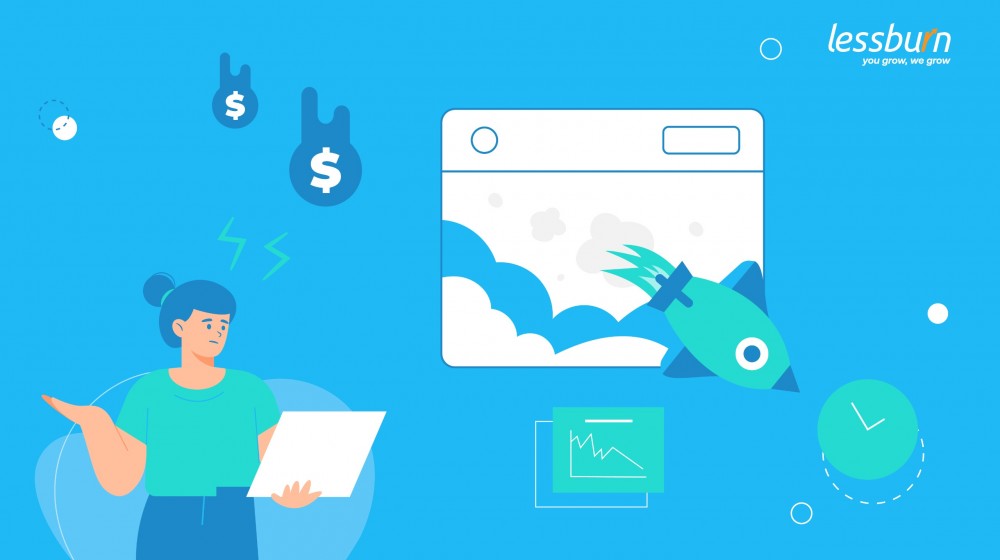
You did everything right. You ran ads, boosted posts, and drove traffic to your website. The numbers say visitors are coming and they’re landing exactly where you planned. And yet, they bounce within seconds.
Most assume this happens because attention spans are shrinking. Some blame design, others blame content. But here’s the truth that is much simpler and far more uncomfortable to accept:
“Users drop off not because they’re impatient, They bounce because your digital experience feels irrelevant immediately” Not after 30 seconds, Not after 10. But within the first 5 seconds.
Let’s unpack what’s really happening in those 5 seconds!
What Actually Happens in the First 5 Seconds:
When a user lands on your page, their brain scans for 3 things immediately:
Is this for me?
Do I trust this?
Is this worth my time?
If even one of those answers feels unclear or negative, they exit almost immediately. This decision rarely takes longer than a few seconds, and it happens before they consciously process your value proposition.
The Real Bounce Triggers Brands Miss
Most marketers optimize for traffic, Few optimize for instant relevance. Here’s where bounce really comes from.
Message Mismatch: Users arrive with a specific expectation created by an ad, search result, or social post. When the landing experience doesn’t mirror that promise, the brain registers friction. It feels misleading, even if unintentionally, and the safest action becomes leaving.
Generic Positioning: Another silent bounce trigger is generic positioning. Websites often rely on safe phrases like
“Best solutions”
“Trusted partner”
“Leading services”
While they sound professional, they fail to create personal relevance. If visitors cannot quickly see themselves in your message or understand how it applies to their situation, they disengage.
No Immediate Value Clarity: Users should never need to scroll to understand what you do or why it matters. When value is hidden below the fold or buried in dense text, the cognitive effort feels too high. Online behavior favors ease, and anything that requires mental work in the first seconds increases exit probability.
Cognitive Overload: Confusion does not lead to curiosity; it leads to bounce. Too many options, competing calls-to-action, crowded layouts, or heavy information density create decision fatigue instantly. Instead of exploring, users withdraw..
Trust Gap: In digital environments, hesitation rarely turns into patience. It turns into departure. Trust gaps accelerate that exit. When proof, credibility, or tangible outcomes are absent early in the experience, hesitation appears.
The Hard Truth: Traffic Is Rarely The True Problem
Many brands invest heavily in acquisition, assuming more visitors will solve conversion gaps. But bounce is not a volume issue; it is a first-impression issue. Digital marketing often focuses on getting the click, while conversions depend on what happens immediately after it.
Changing the Game
This digital experience gap can be fixed when digital marketing moves beyond visibility into resonance. lessburn’s On-Page optimization is built around exactly that shift: turning clicks into belief, and belief into business. The focus is not just on bringing users in, but on making them stay by engineering instant relevance. Every digital journey is shaped around decisions, ensuring each scroll answers why to stay, why to trust, and why to act.